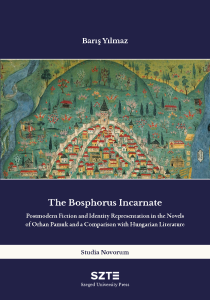
The Bosphorus Incarnate: Postmodern Fiction and Identity Representation in the Novelsof Orhan Pamuk and a Comparison with Hungarian Literature
Keywords:
historical novel, postmodern fiction, Turkish literature, intertextuality, metafiction, identity representation, world literature, east-west dichotomySynopsis
This monograph explores Orhan Pamuk’s fiction in the context of postmodern narrative techniques and identity representation, positioning him as “The Bosphorus Incarnate”—a literary bridge between Eastern and Western traditions. As one of Turkey’s most internationally recognized authors, Pamuk’s work reflects the country’s cultural duality, engaging deeply with both Turkish literary heritage and global postmodern trends. His novels, particularly those written before his rise to international fame, demonstrate a synthesis of Eastern storytelling traditions and Western experimental techniques, making his work a unique site for examining the interplay between tradition and innovation.
Turkish literature has long been shaped by the tensions between modernization and tradition, East and West, particularly since the late Ottoman and early Republican periods. Pamuk’s fiction is embedded in this historical and literary background, addressing themes of memory, history, and identity while challenging the stability of truth through postmodern narrative strategies. His use of metafiction, intertextuality, and historiographic metafiction undermines grand narratives, offering multiple, often contradictory perspectives that reflect Turkey’s fragmented modern identity. By blending these techniques with classical Turkish storytelling forms, Pamuk crafts narratives that question the boundaries between fiction and history.
Identity is a central concern in Pamuk’s novels, both at individual and national levels. Rather than presenting a static, exoticized “mystical East,” his works portray identity as fluid and constructed, shaped by historical narratives and cultural interactions. His engagement with historiographic metafiction is particularly significant in his treatment of collective memory and national history, allowing him to critique authoritative discourses that define cultural identity.
This book also situates Pamuk within a broader literary context through a comparative analysis with Hungarian authors László Darvasi and Viktor Horváth. While Hungarian literature often employs postmodern strategies to confront national history and trauma, Pamuk’s use of these techniques highlights the constructed nature of identity and storytelling itself. This comparison underscores the adaptability of postmodern narrative techniques across different cultural and historical settings.
Ultimately, the study argues that Pamuk’s fiction is not merely a response to Western literary expectations but emerges from a deep engagement with Turkish literary traditions and postmodernist experimentation. His role as “The Bosphorus Incarnate” extends beyond geography, challenging fixed cultural identities and emphasizing the evolving nature of national and literary narratives. Pamuk thus stands as a key figure in both Turkish and global literature, bridging classical and postmodern traditions in his exploration of identity and storytelling.
Chapters
-
I. Introduction
-
II. Who Does Pamuk Write for?
-
III. Orhan Pamuk and His Fiction
-
IV. Postmodern Understanding of Reality and Fictionality
-
V. Cultural Identity and Narratives
-
VI. Postmodern Narratives and Historiographic Metafiction
-
VII. Postmodern Narrative Strategies in the Western and Eastern Canons
-
VIII. Conclusion